
“Is Syria safe to visit?” is the single most common question we receive at Octopus Tourism. Travelers want a clear, honest answer — not a sales pitch and not a doom story. So in this 2026 guide we break down the actual situation region by region, explain what has changed in the last 18 months, and tell you exactly how independent travelers and our clients are experiencing the country today.
The Short Answer
Syria is not a destination for every traveler, and several governments still advise against travel. For visitors who decide to go after checking their own government’s travel advice, the most practical approach is careful planning: work with a reliable local team, focus on well-known routes such as Damascus, Aleppo, the coast, and selected heritage sites, and avoid areas that remain unstable or restricted.
Important: travel conditions can change quickly. Before booking, check your own government’s travel advisory, confirm entry requirements, and speak with a local operator who can review your route and timing. Octopus Tourism can help with Syria travel consultation, private tour planning, accommodation, and local support, but every traveler should make an informed decision based on current advice and personal risk tolerance.
What Has Changed Since the Political Transition
Government travel advisories matter, and every traveler should read the advice issued by their own country before making a decision. Some governments still advise against all travel to Syria, which can affect insurance, consular support, and personal risk. This article is not a replacement for official advice; it is a practical, on-the-ground perspective to help you ask better questions and plan more carefully if you decide to travel.
That does not mean the country is identical to Switzerland. It means the situation is now closer to that of other recovering destinations in the region, where common sense and a good guide make all the difference.
If your government advises against travel, check your insurance conditions carefully and make sure you understand what support may or may not be available in an emergency.
Safety by Region in 2026
Damascus and Surroundings
Damascus is currently the safest and most visited part of Syria. The Old City, the central neighborhoods (Mezzeh, Malki, Abu Rummaneh, Bab Touma), and major tourist sites operate normally. Restaurants stay open late, families walk the streets in the evenings, and women — both local and foreign — move freely. Day trips to Maaloula, Seidnaya, and Bosra are routine.
The Coast: Latakia, Tartus, and the Mountains
The Mediterranean coast was largely untouched by the conflict and has been welcoming domestic tourists for years. Beaches, mountain villages, and the Crusader castles of Krak des Chevaliers and Marqab are easily and safely accessible.
Aleppo
Once a poster city of the conflict, central Aleppo today is a major story of recovery. The Old City citadel and significant portions of the Old Souq have reopened, hotels are running, and travelers regularly spend 2–3 nights here. Reconstruction is visible everywhere; some sections still show damage, but the visitor experience is surprisingly normal and emotionally moving.
Hama and Homs
Both cities are open and routinely included in cultural itineraries. Hama, with its ancient norias, is particularly relaxed and pleasant. Homs has reopened its Old City to visitors and is the launching point for trips to Krak des Chevaliers.
Palmyra and the Central Desert
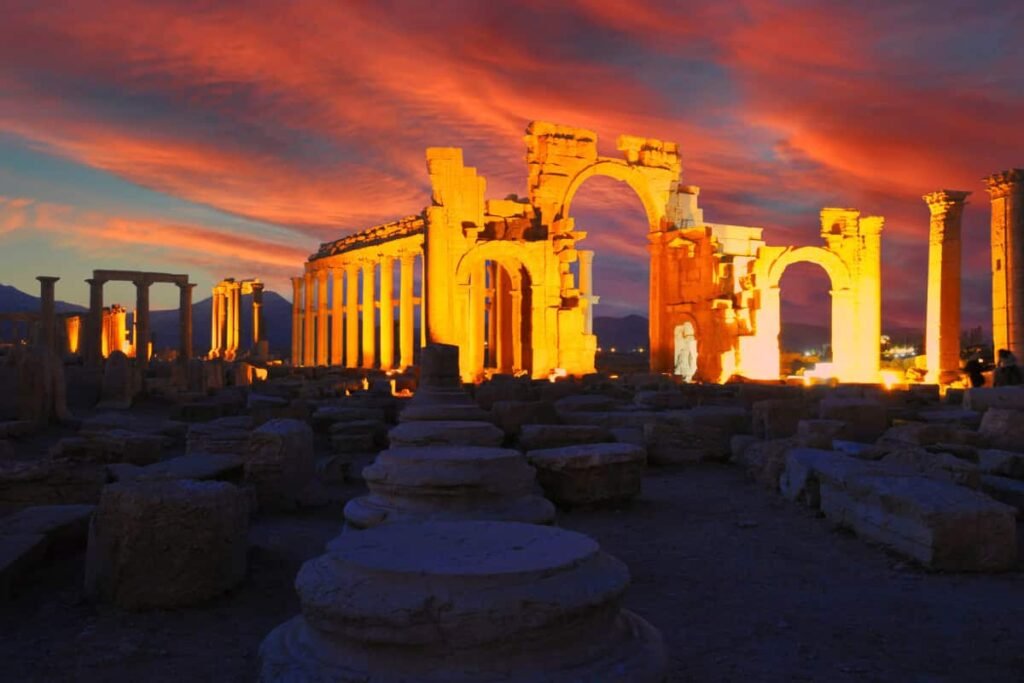
Palmyra is once again on the standard tourist circuit. We recommend visiting with a guide and ideally as a long day trip from Damascus or an overnight in the area; sunrise at the ruins is an experience few travelers ever forget.
Areas We Currently Avoid
A small number of zones — primarily certain border strips in the far north-east and parts of the Syrian Desert near the Iraqi frontier — remain off the tourist map. Reputable operators including Octopus Tourism simply do not include them in itineraries. None of the must-see cultural and historical sites lie in these areas.
Practical Safety Tips for Your Trip
- Travel with a reputable operator who knows current ground conditions in real time.
- Carry your passport and entry stamp in a secure bag at all times — checkpoints are friendly but routine.
- Dress modestly, especially in religious sites and traditional neighborhoods. Knees and shoulders covered is the simple rule.
- Use cash in USD or EUR. Bring crisp, undamaged bills; ATMs that accept foreign cards are still rare outside the largest hotels.
- Respect photography rules — never photograph military, security, or government buildings.
- Stay informed. A good local guide will tell you if a planned route needs adjusting on the day.
- Get travel insurance that explicitly covers Syria, even if it costs more than usual.
Are Women Travelers Safe in Syria?
Solo female travelers consistently report Syria as one of the more comfortable countries in the region for women. Street harassment is uncommon, hospitality is overwhelming, and culturally appropriate dress goes a long way. Many of our female clients travel without male companions and have had outstanding experiences.
What About Government Travel Advisories?
Many Western governments still maintain elevated travel advisories for Syria. These are typically slow to update and reflect a worst-case-scenario, country-wide stance rather than the on-the-ground reality of Damascus or the coast. Read advisories, but also speak with travelers and operators who have been there in the last 90 days for a more current picture. We are happy to put prospective clients in touch with recent guests.
How Octopus Tourism Keeps You Safe
- Our role is to reduce uncertainty, not to make unrealistic promises. We plan routes around current local conditions, coordinate reliable transport and accommodation, keep communication open through WhatsApp, and adjust itineraries when a route, timing, or destination is not suitable.
- Vetted, English-speaking local guides on every itinerary
- Private, late-model vehicles with experienced drivers
- Pre-vetted hotels with proven security and service standards
- 24/7 in-country point of contact during your trip
- Flexible re-routing if any unexpected situation arises
Ready to Plan a Careful Syria Trip?
If you are considering Syria, start with a consultation. Tell us your travel dates, interests, nationality, and comfort level, and we will help you understand realistic routes, accommodation options, and practical next steps.